Species
Five animals the south does not have
Not rarer versions of southern species — genuinely different animals, adapted to dry country.
Why the animals change
Northern Kenya is arid. Rain is low and unreliable, the vegetation is thorn scrub and doum palm rather than grassland, and the whole system depends on one river — the Ewaso Ng’iro.
Grazers built for grass plains do not do well here. Browsers, and animals that can go long periods without drinking, do. That is the whole explanation for the change in cast.
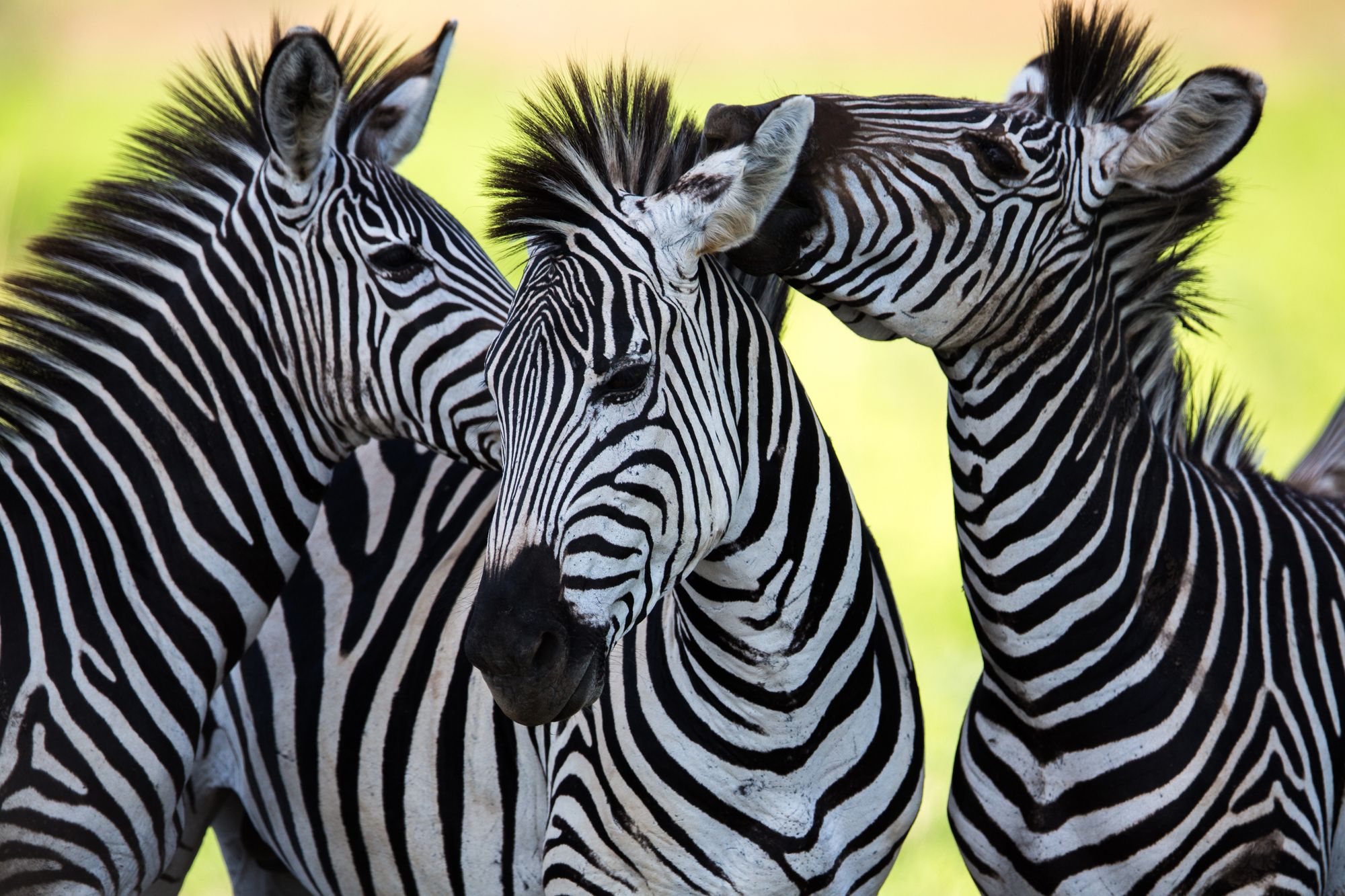
Grevy’s zebra
The largest wild equid on earth, and endangered. Three tells, in order of usefulness at distance:
- Enormous rounded ears — like a mule’s. Visible before anything else.
- A white, unstriped belly. A plains zebra’s stripes wrap underneath.
- Narrower, far more numerous stripes, which do not meet in a chevron over the rump.
Both species occur in Samburu, sometimes in the same view, which makes this the best place in Kenya to learn the difference.
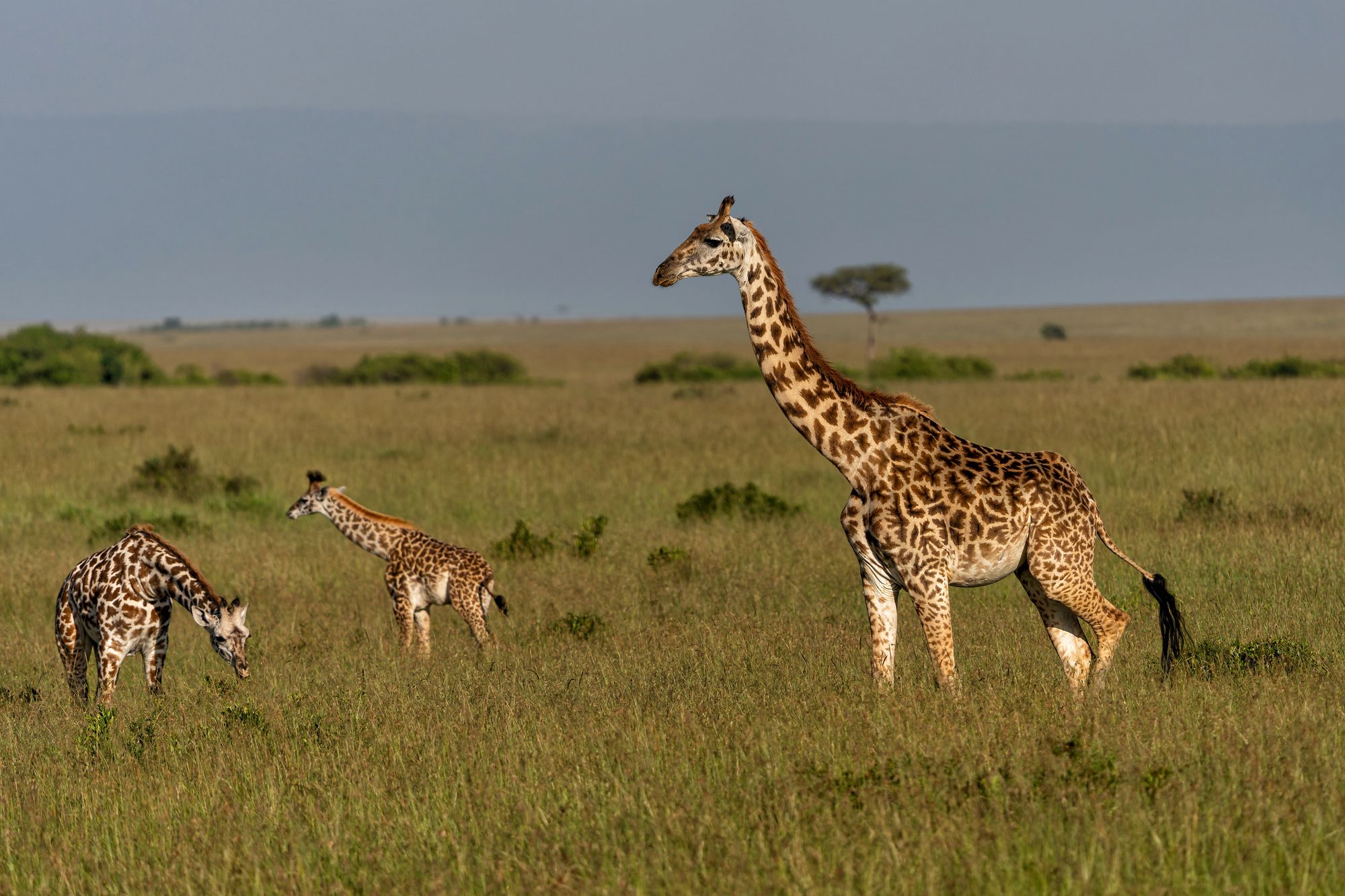
Reticulated giraffe
Clean-edged liver-red polygons separated by narrow white lines, as though drawn with a ruler. The Masai giraffe you see in the Mara has ragged, oak-leaf-shaped patches.
Once you have seen both you cannot unsee it. Also endangered.
Gerenuk
The "giraffe gazelle". An absurdly long neck on a slight body, and the habit of standing on its hind legs to browse branches nothing else can reach.
It is the one visitors most want to photograph and the one that most often refuses to perform. Patience.
Beisa oryx
Grey, with straight rapier horns and a striking black facial mask. Built for dry country: it can tolerate a rise in body temperature that would kill most mammals rather than waste water on sweating.
Common in Samburu and Buffalo Springs, usually in small groups in open country.
Somali ostrich
A distinct species rather than a colour form of the common ostrich. The male has a blue-grey neck and legs rather than pink.
The least reliable of the five, but far from rare.
What else is here
- Elephant along the Ewaso Ng’iro, and often crossing it — one of the great sights here
- Leopard in the riverine forest. Samburu is genuinely good for them.
- Lion and cheetah, at lower density than the Mara
- African wild dog — a real chance, which is more than most of Kenya can say
- Crocodile and hippo in the river
- Vulturine guineafowl — cobalt blue, absurd, and absolutely everywhere
- Over 450 recorded bird species, including several northern specials
More from our Kenya guides
Specialist guides across our Kenya network
Each of these is a focused guide we publish. Same Kenya specialist behind every enquiry.
Ready to turn this into a real itinerary?
Send us your dates, who is travelling and roughly what you want to spend per person per night. Our Kenya specialist comes back within 24 hours with a plan built around them and a costed quote.